
All types of winter sports - the ultimate guide to your winter adventure
🏂 Introduction – Why winter sports are not only cool, but also versatile
Winter sports are not only hugely popular, but also incredibly versatile, so you’ll never get tired of snow and ice. Since winter sports emerged as a recreational activity, dozens of disciplines have developed, each with its own charm. It’s not just skiing and snowboarding that attract masses of fans; alternative sports such as ice climbing, ice diving, and ice curling are also quickly gaining ground. This means you can keep discovering new ways to challenge yourself and try something new every winter.
In the past, winter sports were mainly for people in mountainous areas, but today there are indoor arenas, artificial ice rinks, and snow parks, so you can practice all year round. This makes winter sports more accessible, so everyone - regardless of skill level or location - can take part. The variety of disciplines also means there’s something for everyone, so you never have to settle for “the standard.” In addition, many sports offer a unique combination of strength, technique, speed, and fun, which makes this genre so popular.
In short, winter sports are not only fun, but also good for your body, great for your social life, and a perfect outlet. First, you work almost all your muscles, then you also work on your balance and focus, and eventually you’ll notice that it’s mentally relaxing, too. That’s why winter sports remain so appealing: you combine action, adventure, relaxation, and health all in one place.

⛷️ Alpine skiing – Classic, fast, and challenging
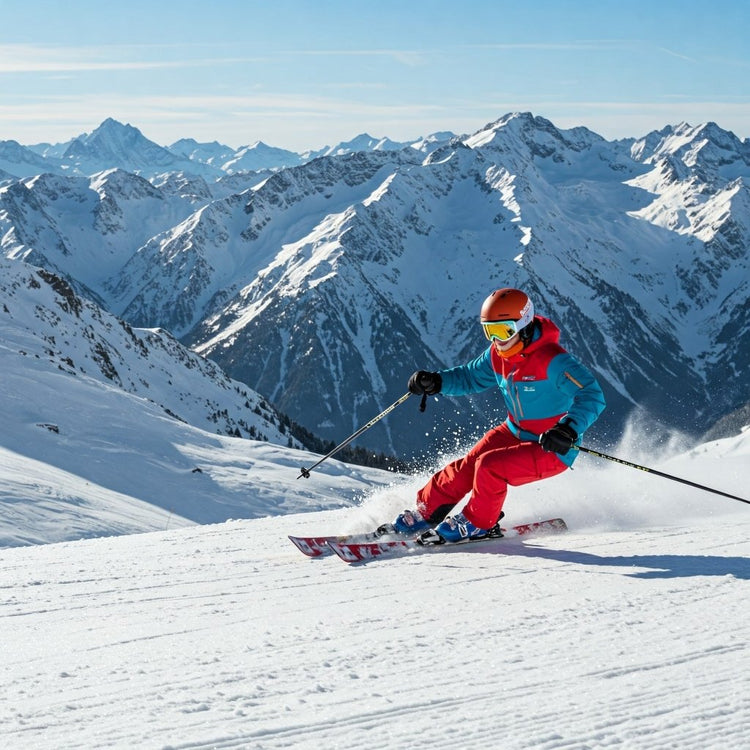
Alpine skiing is the best-known winter sport because it brings together speed, technique, and adventure in spectacular fashion. First, you choose your run, then you pick your line, then you push off and fly downhill - all within seconds. This gives you a pure adrenaline rush, making you want to head back up the mountain again and again. It’s no wonder alpine skiing has been a winter sports classic for years.
There are different disciplines in this sport, namely slalom, giant slalom, super-G, and downhill. Each event calls for a different approach, so you can find your own style. However, they’re all intense, challenging, and seriously addictive. The equipment is also crucial: good skis, sturdy boots, and sharp edges make the difference between control and chaos. That’s why preparation is essential, so you can head down the mountain with confidence.
Alpine skiing has been practiced professionally since the 1930s, creating a huge community. This means you always have access to lessons, tips, and events. You can find endless inspiration not only on the slopes but online too, helping you keep improving. Ultimately, it’s all about control, balance, and courage – and that combination is exactly what makes this sport so addictive.
🏂 Snowboarding – Skiing’s Rebellious Brother
Snowboarding is not just a sport, but also a lifestyle that helps you push your limits and express yourself. It originally started as an alternative to skiing, but has since become just as mainstream and perhaps even cooler. First you get to know your board, then you learn to glide, then to jump, and eventually to fly. This builds your confidence, so you dare to try more and more.
There are several styles: freestyle, freeride, and alpine snowboarding. Freestyle is all about tricks like jumps, spins, and grinds. Freeride means charging off-piste, while alpine snowboarding is all about speed and sharp turns. Thanks to this versatility, you can choose what suits you, so your snowboarding style feels like an extension of your personality. Plus, snowparks, halfpipes, and rails can now be found at almost every resort, giving you plenty of opportunities.
It’s not just young people who choose snowboarding; more and more adults are discovering the feeling of freedom this sport offers. As a result, you see a more diverse crowd on the slopes, creating a relaxed and welcoming atmosphere. First, it’s challenging, then creative, physically intense, and ultimately incredibly liberating. Snowboarding is more than a sport: it’s an experience that never gets old.
🎿 Cross-Country Skiing – Gliding Sustainably Through Nature
Cross-country skiing is the winter sport where endurance, technique, and tranquility come together. First, you move at a rhythmic pace through stunning landscapes, then you build your fitness, improve your balance, and ultimately experience pure relaxation. This makes cross-country skiing good not only for your body, but also for your mind, so you feel completely refreshed afterward.
There are two main techniques: classic and skating. Classic skiing is more like walking, as you glide along groomed tracks. Skating, on the other hand, requires more strength and resembles ice-skating movements. Both styles have their own appeal, so you can choose whichever suits you best. What’s more, you can practice anywhere – from mountainous areas to frozen meadows – keeping it accessible and flexible.
Cross-country skiing is not only suitable for elite athletes, but also perfect for beginners, older people, and athletes recovering from injuries. Because it puts little impact on your joints, it’s ideal if you want to prevent injuries. Plus, you burn tons of calories, work your core, and build incredible fitness. In short: cross-country skiing is a quiet powerhouse that keeps challenging you, winter after winter.
⛸️ Skating - Speed, precision, and grace on ice
Skating has many facets, making it not just a sport but also an art form. First, there's long-track speed skating, where pure speed and endurance are central. Then there's short track, which revolves around tight turns, clever tactics, and explosive power. Figure skating also brings together technique, creativity, and choreography. This means there's a place on the ice for every style and talent.
Long-track speed skating is popular in the Netherlands because of its history, its champions, and the Elfstedentocht. It's addictive not only because of the speed, but also because you get into a flow. Short track, on the other hand, is more hectic and requires nerves of steel, because every mistake is punished immediately. Yet it remains spectacular, precisely because of its surprising results.
Figure skating is a completely different experience. First you learn to glide, then to spin, then to jump, and eventually to perform complete choreographies to music. This develops not only your technique, but also your sense of expression. Whether recreational or professional, skating offers plenty of variety, so you can choose your own path - whether you're after speed, grace, or adrenaline.
🏒 Hockey - Fast, hard-hitting, and full of team spirit
Hockey isn't just a game, but an intense sport full of speed, strength, and strategy. First, you glide across the ice at high speed, then anticipate your opponent's moves, adapt quickly, and finally score with sheer power. This makes for a dynamic game that keeps you constantly on the move. It also requires teamwork, so you always work and win together.
Although hockey is often seen as rough, it's also a highly technical sport. Stickhandling, positioning, and power plays require insight and precision, so you have to stay sharp at all times. The sport also demands a lot from your body: skating skills, explosive power, and quick reflexes. You'll get fit in no time, and become stronger off the ice too.
Hockey isn't just for men: women, young people, and people with disabilities play too. Thanks to sledge hockey, where you play seated on a sled, the sport is accessible to everyone. More and more creative variations are also emerging, such as hockey played with sleds, bicycles, or even blindfolds, making room for both fun and competition. In short: hockey is tough, fast, and social - and that's why it's irresistible.
🎯 Biathlon - Skiing, shooting, and nerves of steel
Biathlon combines two completely different worlds: cross-country skiing and precision shooting. First, you glide at full speed through snowy forests, then bring your heart rate down, take aim at a small target, and finally have to hit it. This creates a unique combination of exertion and focus, challenging you fully both physically and mentally.
Biathlon was originally military training, but since the 1960s it has grown into a popular winter sport. Because the contrast between action and silence is so great, it’s exciting both to watch and to try yourself. It’s not just speed but also calm that determines the result, teaching you to switch gears like never before. What’s more, every miss means extra penalty loops, making for nail-biting races.
That’s why biathlon is perfect if you love variety, adrenaline, and precision. First, you train your whole body, then your concentration, your discipline, and finally your resilience. As a result, not only does your physical fitness improve, but so does your mental strength. In short: biathlon is the ideal winter sport if you want to win with both muscle power and quick thinking.
🧹 Curling – Sliding chess on ice with steel brooms
Curling may look relaxing, but don’t be fooled: this sport is tactical, exciting, and requires an incredible amount of precision. First, you slide a heavy stone across the ice, then your teammates guide its direction with brooms, you try to hit the target, and finally block your opponent. It all comes down to teamwork and strategy, so you can make the difference together.
Although it often looks calm, curling is full of action and emotion. It’s not just the stones that glide; your brain has to keep up too. First, you analyze the playing surface, then plan your attack, anticipate your opponent, and finally choose the perfect shot. That’s why many people call it “chess on ice,” but with brooms and more drama.
What’s more, curling is accessible: young or old, beginner or expert—everyone can take part. Since becoming an Olympic sport, it has grown in popularity worldwide. As a result, more and more clubs, tournaments, and fans are emerging. In short: curling is cool, calm, and chaotic all at once—and that’s exactly what makes it so addictive.
🛷 Luge, bobsleigh & skeleton – Icy speed without mercy
If you love pure speed and intense adrenaline, these sled sports are just for you. Luge, bobsleigh, and skeleton may look similar, but they differ hugely in posture, technique, and risk. First, you choose your line, then dive into the turns, try to steer with minimal movement, and finally race across the ice at 130 km/h. That way, you feel not only the speed, but also pure control—or the lack of it.
You ride a luge lying on your back, feet first. Skeleton is different: you lie on your stomach, head first. Bobsledding is done in teams of two or four, who push the sled together, climb in, and hurtle downhill. This combines strength, coordination, and courage, requiring you to surrender completely to the speed. But be warned: mistakes are punished mercilessly, so focus is essential.
Since being introduced at the Olympic Games, these sports have grown increasingly popular—not only for their speed but also for the excitement and teamwork. In short, if you want to race on ice as if your life depends on it, you should definitely try these sports—but with courage, training, and protective gear.
🌀 Freestyle skiing & snowboarding – Creativity, courage, and aerial acrobatics
Freestyle skiing and snowboarding are the sports for anyone who doesn’t want to be held back by rules, but would rather fly, spin, and impress. First, you learn the basics of jumping, then train your rotations, work on combinations, and finally show off your unique style. You’re not limited to straight lines, but free to follow your imagination, turning the slope into your own playground.
Freestyle skiing includes moguls (bumps), slopestyle (with rails and jumps), aerials (air tricks), ski cross (racing with obstacles), and halfpipe (tricks in a U-shaped course). Freestyle snowboarding has similar variations, but feels a little looser and wilder. Both disciplines take courage, balance, and body control, challenging you to push yourself with every run. First, you have to be brave, then practice, keep at it, and finally let go.
Despite the risks—such as falls and injuries—freestyle continues to grow, not only at the Olympic Games but also in snow parks around the world. New tricks, styles, and influencers emerge every year, keeping the sport fresh. In short, freestyle is art at speed, adrenaline with style, and pure freedom in the air.
🏔️ Backcountry & freeride – Pure nature, untamed terrain, and endless freedom
For those who find the beaten paths too boring, backcountry skiing and snowboarding offer a completely different experience. First, you climb a pristine mountain with skins on your skis or a splitboard, then choose your descent, take a deep breath, and finally glide through untouched powder. This gives you a feeling of complete freedom, leaving you to rely entirely on yourself and nature.
Freeride is different from freestyle: you don’t do tricks, but find your own line through off-piste terrain. Backcountry is even wilder: you climb, navigate, and descend on your own, away from the ski lifts. This teaches you map reading, avalanche safety, survival skills, and how to trust your instincts. It’s not only physically demanding but mentally challenging too—and all the more rewarding for it.
Since the rise of ski mountaineering and splitboarding, this branch has grown rapidly. There are now courses, guides, and apps to help you ride safely. But be warned: risks such as avalanches, cliffs, or getting lost are real, so preparation is essential. In short: freeriding is rugged, pure, and intense - perfect for anyone looking for adventure without limits.
🌬️ Lesser-Known Winter Sports - From Ice Sailing to Skijoring and Ice Surfing
Alongside the major winter sports, there's a whole world of unusual and creative ice activities. Think ice sailing, where you race across frozen lakes in a kind of wind-powered cart. Or ice surfing, where you glide over smooth ice with a surf sail, first cautiously, then full throttle, then carving turns, and finally flying across the open expanse. This lets you experience speed in a completely different way.
Another standout is skijoring - where you let a horse or dog pull you along on skis. First you learn the technique, then build trust with the animal, then pick up speed together, and eventually experience an incredible partnership. Dog skijoring is a little more playful, while the horse version demands brute strength. That makes it both accessible and spectacular.
There are also gems like ice diving (for the real diehards), ice cycling, ice kiting, ice swimming, and ice sailing. They're not only unique, but they also take you to places few others visit. In short: if you want to try something different from skis or a board, this is your chance to shine in the cold in an original way.
♿ Winter Sports for People with Disabilities - Inclusive, Empowering, and Inspiring
Winter sports aren't just for a select few, but for everyone - including people with disabilities. Thanks to technological advances and creative adaptability, there are now dozens of adaptive winter sports. Sled hockey became popular first, followed by sit-skiing and ski carts, then freestyle variations, and eventually full-fledged Paralympic disciplines. This is creating an inclusive world of winter sports where everyone can take part.
Adaptive alpine skiing uses mono-skis or bi-skis, where you sit in a special frame with skis underneath. This gives you control, so you can ski down the mountain at full speed. Cross-country skiing and snowboarding can also be adapted, with extra stabilization or support. There are also aids for visual or neurological challenges, not just mobility impairments. So no disability has to limit the experience.
Moreover, the community is incredibly powerful. It offers not only inspiration, but also support, shared knowledge, and motivation. As the Paralympic Games receive more and more attention, these heroes are becoming more visible too. In short: winter sports for people with disabilities aren't something to pity, but something truly admirable, empowering, and full of life.
🎉 Winter sports as fun & games – Creativity, laughter, and friendship on ice
Not every winter sport has to be dead serious - there’s also room for fun, laughter, and a good dose of silliness. Take sledding, for example: first you climb up, then you laugh, next you scream, and finally you speed all the way down. Or ice shuffleboard, where you first aim, then slide, next cheer or swear, and finally play another round. This brings people together so you can have fun as a group.
Kids, families, and groups of friends all enjoy these accessible ice activities. Ice karting, ice golf, ice football, and making ice sculptures are examples of creative snow games. They’re not only playful but also surprisingly competitive. There are also events such as ice sculpture competitions or ice marathons, where you can test your skills - without pressure, but with tons of fun.
What’s more, these activities are perfect for après-ski or snowy days when you’re not in top shape. That’s why they remain popular, even when the weather is bad or the slopes are crowded. In short, winter sports aren’t just about elite competition or performance - they’re also about fun, relaxation, and simply enjoying each other’s company.
🤪 Extreme & creative variations – Winter sports with a twist
For the real daredevils, there are bizarre, hilarious, and extremely creative variations on winter sports. Think ice hockey on stilts, blindfolded, with hoops, or even with a spoon. At first it seems absurd, then you try it yourself, next you laugh your head off, and eventually you want another game. The ice becomes your playground - with imagination as the only limit.
Other gems? How about ice climbing with a shovel, ice canoeing with paddles, ice football with spring-loaded shoes, or ice speedway on motorized sleds? They don’t just sound crazy - they also require real skills. That raises the challenge, pushing even experienced athletes out of their comfort zone.
These creative variations are perfect for events, group outings, or simply a fun day in the snow. They also make winter sports accessible, since you don’t necessarily need technical knowledge. In short, these crazy variations turn winter into a celebration - and make sure no one gets bored, even with snow down your neck and a spoon in your hand.
🛡️ Safety and preparation – Hit the snow smartly to avoid trouble
Winter sports are amazing, but without preparation, they can be brutally unforgiving. First, check your equipment, then your fitness, next your surroundings, and finally your route. This helps you avoid surprises so you can fully enjoy yourself. Safety is essential not only for beginners but also for experienced athletes - precisely because it’s easy to get overconfident.
First, safety starts with the right clothing: layers that are waterproof, breathable, and warm. Next, check your equipment: sharp edges, good bindings, and a properly fitting helmet are essential. Then comes knowledge: know what to do in case of avalanche danger, ice break-up, or exhaustion. Ultimately, it all comes down to preparation, awareness, and common sense.
It’s also important to take your body’s signals seriously. Sore muscles, dizziness, or fatigue aren’t signs of weakness but warnings. So plan your day wisely: start slowly, take breaks, eat well, and stay hydrated. In short, a smart start helps you avoid a painful finish. And that’s the best investment in enjoying winter sports.
🎯 Conclusion – Winter sports are for everyone, anytime, in every way
All in all, the world of winter sports is far broader, more exciting, and more inclusive than you might think. It’s not just skiing and snowboarding: ice hockey, ice climbing, curling, and dozens of creative variations mean you can discover something new every season. That keeps things fresh, challenging, and above all, fun. Then you share it with friends, inspire others, and eventually become an ambassador for the joy of winter.
However, it is important to choose what suits you: do you want speed or grace, strength or balance, solo or as part of a team? Adrenaline junkies and those seeking relaxation alike can find a sport—or even several. There are also winter sports for people with disabilities, so no one is left out.
In short: put on your thermal layers, choose your favorite, prepare well, and go for it. Winter sports aren’t just sports; they’re adventure, connection, and making memories during the coldest but most beautiful time of year.
❓ Frequently asked questions (FAQs)
1. What are the most popular winter sports for beginners?
For beginners, alpine skiing, snowboarding, and cross-country skiing are the most accessible. First, you learn the basic techniques; then you build confidence so you can safely head up the mountain.
2. What winter sports can you do without mountains?
Think skating, curling, ice hockey, or ice stock sport. This means you can enjoy winter sports in the Netherlands, even without snow or mountains.
3. Are there winter sports suitable for people with disabilities?
Yes! With adaptations such as mono-skis, sled hockey, and guided snowboarding, people with disabilities can fully participate. This is making the world of winter sports increasingly inclusive.
4. What equipment do you need for safe winter sports?
Essential gear includes warm layers, a helmet, well-maintained equipment, and protective gear. This helps prevent injuries and lets you perform at your best.
5. What are the most unique winter sports?
Ice sailing, skijoring, ice surfing, and ice climbing with an ice axe are among the most unusual options. They let you try something truly different from ordinary skiing.