
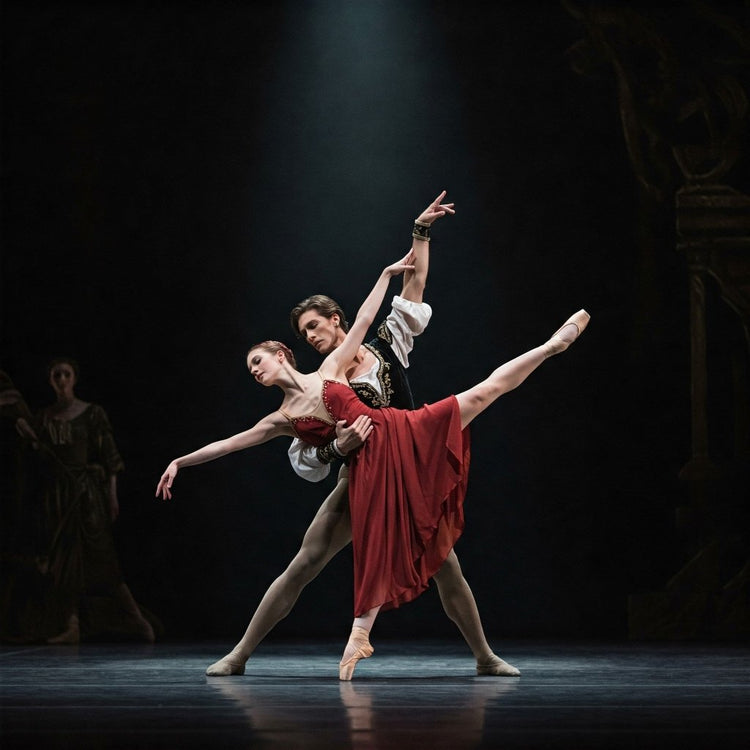
A breathtaking pas de deux: The magic of ballet denied
Ballet is not just a dance style. It is an art form that brings together discipline, technique, emotion, and collaboration. Within this world, the pas de deux (a duet between two dancers) is one of the most iconic and impressive elements.
In this article, we take a closer look at the history, techniques, and impact of the pas de deux. We also debunk misconceptions about ballet and show how modern developments continue to renew the art form.

🩰 Introduction to ballet and the pas de deux
Ballet is often associated with graceful movements, pointe shoes, and tutus. Yet ballet is much more than just aesthetics. It is about control, strength, technique, and expression. The pas de deux is an essential part in which two dancers - usually a man and a woman - tell a story together through movement.
🔹 What makes a pas de deux unique?
- Collaboration: Both dancers must be completely in sync with each other.
- Physical challenge: The man lifts and supports the woman while she maintains effortless elegance.
- Expression and emotion: A pas de deux tells a story and moves the audience on a deeper level.
📜 The history and significance of the pas de deux in ballet
The pas de deux originated in the 17th century at the French court, when ballet was performed exclusively for kings and nobles. In the 19th century, during the Romantic period, the pas de deux became a regular part of classical ballet performances.
🔹 Important historical developments
- Romantic ballet (1800-1850): The pas de deux became more poetic and graceful.
- Russian classical ballet (1850-1900): Choreographers such as Marius Petipa gave the pas de deux greater technical depth.
- Modern influences (1900-present): Today, choreographers incorporate elements from modern dance and other styles.
🎭 Technical requirements and skills needed for a pas de deux
Dancing in a pas de deux is physically and mentally challenging. It requires strength, balance, coordination, and trust.
🔹 What should a dancer master?
- Strong foundation: Technical control of classical movements such as pliés, arabesques, and jetés.
- Trust in your partner: The slightest misstep can ruin a lift.
- Breathing and timing: Movements should flow seamlessly into one another.
- Physical strength and endurance: Both men and women need tremendous muscle control.
👉 Did you know? Dancers often train for years before performing their first real pas de deux!
🌟 Iconic pas de deux performances in ballet history
Throughout the centuries, there have been countless legendary pas de deux moments. Some performances are so famous that they are synonymous with ballet itself.
🔹 Classical masterpieces
- Swan Lake (Tchaikovsky) – The “White Swan” pas de deux is world-famous.
- The Nutcracker (Tchaikovsky) – The “Sugar Plum Fairy” pas de deux is magical.
- Giselle (Adolphe Adam) – A dramatic and heartbreaking pas de deux.
🔹 Modern gems
- Romeo and Juliet (Prokofiev) – Intense emotion and dramatic lifts.
- Manon (Kenneth MacMillan) – A challenging and sensual pas de deux.
- In the Middle, Somewhat Elevated (William Forsythe) – Innovative and athletic.
🚀 Challenges and difficulties of performing a pas de deux
Performing a pas de deux may look effortless, but it takes years of practice.
🔹 Common challenges
- Physical strain: The dancer often has to spend hours on pointe.
- Risk of injury: Incorrect landings can cause serious injuries.
- Communication problems: Poor timing can lead to a botched lift.
👉 Modern ballet companies are increasingly working with physical therapists and sports scientists to prevent injuries!
❤️ The emotional and artistic connection in a pas de deux
One of the most powerful aspects of a pas de deux is its emotional impact.
- Dramatic ballet: Think of Giselle, where love and sorrow come together.
- Joyful pas de deux: Such as in The Nutcracker, where joy is at the heart of it.
- Sensual duets: For example, in Carmen, where passion takes center stage.
👉 Fun fact: Many ballet dancers develop a deep bond with their regular dance partner. This leads to even stronger performances!
🌍 Famous ballet companies and choreographers known for their pas de deux
Ballet companies around the world bring the most beautiful pas de deux performances to life.
🔹 Top ballet companies
- The Mariinsky Ballet (Russia) – Classical style at the highest level.
- The Royal Ballet (London) – Innovative and traditional at the same time.
- Dutch National Ballet – World-class and innovative.
🔹 Famous choreographers
- George Balanchine: Known for fast and complex pas de deux.
- Kenneth MacMillan: Created deeply emotional duets.
- William Forsythe: Experimented with modern and classical styles.
🏋️ Training and preparation of dancers for performing a pas de deux
Every ballet dancer trains daily to be physically and mentally prepared for a pas de deux.
🔹 Essential training aspects
- Muscle strength and flexibility: Especially for lifts and balance.
- Core stability: For control during turns and jumps.
- Stamina: A performance can be physically exhausting.
- Technical rehearsals: Practicing lifts and movements with a partner.
👉 Trend analysis: More and more dancers are using cross-training with Pilates, yoga, and strength training to improve their performance!
🎭 The impact and influence of the pas de deux on the ballet industry
The pas de deux has taken ballet to a higher level. Without this duet, ballet would be far less dramatic and impressive.
- Influence on modern dance: Pas de deux elements are also used in contemporary dance.
- Social media: Viral videos of pas de deux performances attract millions of viewers.
- Greater diversity: Choreographers are experimenting with gender roles and different dance styles.
👉 Latest trend: Gender-neutral pas de deux are becoming increasingly common, in which dancers aren’t bound by traditional male-female roles!
🎬 Conclusion: The enduring beauty and magic of the pas de deux in ballet
Whether you’re a ballet lover or an athlete looking for a new challenge, the pas de deux remains a timeless and impressive art form. The strength, control, and emotion it brings together make it one of the most fascinating aspects of ballet.
So, the next time you watch a ballet performance, pay close attention to the teamwork, technique, and emotional expression. You’ll see ballet in a whole new light!