
Everything you need to know about referee whistles: The ultimate guide
When we think of sports, we think of the action on the field, the athletes, and the drama. But in the middle of that field, often overlooked yet crucial to the flow of the game, stands the referee with his whistle. In this ultimate guide, you'll discover everything you need to know about referee whistles, from the different types of whistles to how they're used in different sports. Whether you're a sports enthusiast or simply curious about the secrets behind this seemingly simple instrument, this guide will give you insight into the world of referee whistles. Learn how a single shrill sound can steer an entire match and how referee whistles play a crucial role in fair play and maintaining order on the field. Get ready to discover the fascinating world of referee whistles and never watch a sports match the same way again.
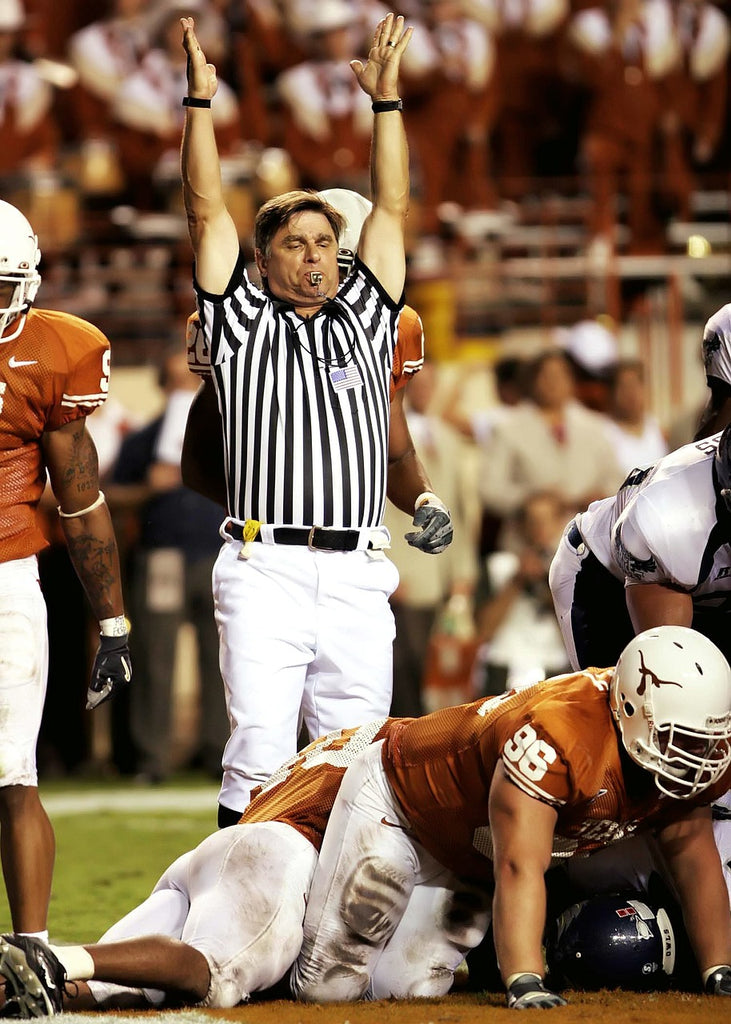
The history of referee whistles
Whistle signals, used for communication for centuries, originated in the ancient world. The first whistles, made of bone or wood, were used to give commands during hunts or military maneuvers.
It was not until the 19th century that the whistle was introduced into the world of sports. In 1878, the English gentleman Joseph Hudson designed the first referee whistle, specifically for football matches. This was a revolution in sports, as before then, referees communicated their decisions through verbal commands or by waving flags.
Hudson's whistle was soon adopted by other sports, such as hockey and basketball. Today, the referee whistle is an essential accessory in almost all sports.
In addition to traditional metal whistles, electronic whistles are also available today. These whistles offer added benefits, such as different volume levels and pitches.
The history of the referee whistle is a fascinating story of innovation and evolution. From the ancient world to modern sports fields, the whistle remains an important symbol of authority and order.
Types of referee whistles
Over the years, different types of referee whistles have been developed. Each type has its own features and advantages.
The most commonly used whistle is the traditional metal whistle. It is lightweight and easy to use. It produces a piercing sound that can be heard clearly in all conditions.
In addition to metal whistles, there are also plastic whistles. These are lighter and cheaper than metal whistles. However, they often have a less powerful sound.
Electronic whistles are becoming increasingly popular. These whistles offer extra benefits, such as different volume levels and pitches. Some electronic whistles even have a built-in timer.
Choosing the right whistle depends on several factors, such as the sport, the players’ level, and the referee’s personal preference.
Some of the best-known referee whistle brands are Acme, Fox 40, and Pro-Lite. These brands offer a wide range of whistles at different price points.
In addition to the whistle itself, various accessories are available, such as whistle lanyards, whistle guards, and whistle cases. These accessories help protect and store the whistle.
Anatomy of a referee whistle
A referee whistle is an apparently simple instrument, but it consists of several parts, each with an important function.
The most prominent parts are the mouthpiece, the tube, and the sound chamber. The mouthpiece is where the referee blows to produce sound. The tube amplifies the sound, and the sound chamber gives it its specific pitch.
In addition to these three main components, there are several other parts, such as the ball, the spring, and the stopper. The ball moves inside the tube and creates the vibrations that produce the sound. The spring holds the ball in place, and the stopper prevents it from moving too far out of the tube.
The materials used to make a referee whistle affect the sound quality. Most whistles are made of metal, plastic, or wood. Metal whistles have a powerful sound, plastic whistles are lighter, and wooden whistles have a warm tone.
The size of a referee whistle is also important. Larger whistles have a more powerful sound, but are harder to carry. Smaller whistles are easier to carry, but have a less powerful sound.
Choosing the right referee whistle is a personal matter. Factors such as the sport, the players' level, and the referee's personal preference all play a role in the choice.
The importance of referee whistles in sport
Referee whistles are more than just signaling devices. They play a crucial role in the world of sport. Whistle signals mark the start and end of matches, stoppages, and restarts. They provide information about the flow of play, penalties, and violations.
The whistle helps referees maintain order, guide players, and create a safe and fair playing environment. Without a whistle, sport would become a chaotic and unpredictable affair.
In different sports, whistle signals have unique meanings. In soccer, for example, there is a whistle signal for the start of the match, a whistle signal for the end of the match, a whistle signal for an offside position, and a whistle signal for a penalty.
Players and coaches also use whistle signals, in addition to referees. For example, players can use a whistle signal to indicate an injury. Coaches can use a whistle signal to give their players instructions.
The referee's whistle is an indispensable symbol of authority and order in sport. It is an instrument that helps create a safe, fair, and enjoyable playing environment.
How to choose the right referee whistle
Choosing the right referee whistle is important to ensure an optimal sound experience. There are several factors to consider when purchasing a whistle.
First, it is important to determine what type of whistle you need. There are traditional metal whistles, plastic whistles, and electronic whistles. Each type has its own pros and cons.
Second, it is important to consider the size of the whistle. Larger whistles produce a louder sound, but are harder to carry. Smaller whistles are easier to carry, but produce a less powerful sound.
Third, it is important to consider the pitch of the whistle. Some whistles have a high pitch, while others have a low pitch. The pitch should suit the referee's personal preference.
Fourth, it's important to consider the price of the whistle. Referee whistles are available at all price points. It's important to choose one that fits your budget.
Finally, it's important to try out the whistle before buying it. This way, you can make sure it feels comfortable in your hand and produces a sound you like.
Proper care and maintenance of referee whistles
A referee's whistle is an investment. By taking good care of and maintaining the whistle, you can extend its lifespan and ensure optimal sound quality.
It's important to clean the whistle after each use. You can do this by holding it under the faucet and blowing through the mouthpiece. You can also use a whistle brush to clean the inside.
It's important to disinfect the whistle once a month. You can do this by submerging it in a solution of water and vinegar. After disinfecting it, make sure to rinse it thoroughly with water.
To protect the whistle from damage, it's important to keep it in a pouch or case. This prevents it from getting scratched or damaged.
When the whistle no longer works properly, it's time to replace it. This may be necessary if the whistle is cracked, the ball no longer moves properly, or the sound is no longer right.
Different sounds and their meanings
A referee's whistle is more than a signaling device. It is an instrument the referee uses to communicate with players and spectators. Each whistle signal has its own meaning.
Some of the most commonly used whistle signals are:
- One short whistle: This signal indicates that the game or a phase of play is starting or restarting.
- One long whistle: This signal indicates that the game or a phase of play is being stopped.
- Two short whistles: This signal indicates that a foul has been committed.
- Three short whistles: This signal indicates that a player is being substituted.
Besides these basic signals, there are many other whistle signals. The precise meaning of a whistle signal may depend on the sport.
In soccer, for example, a short whistle with the hand raised means offside. A long whistle with the hand lowered means a goal has been scored.
It is important for players, coaches, and spectators to know the different whistle signals. This helps everyone follow and understand the game better.
Using referee whistles effectively
The referee whistle is a powerful tool for maintaining order, guiding players, and creating a safe and fair playing environment. However, it is important to use the whistle effectively.
Some tips for using the referee whistle effectively:
- Make clear, short whistle signals. Use a steady pitch and blow with consistent force.
- Make eye contact with the players you are whistling at. This makes it clear that you have their attention.
- Use the whistle together with verbal instructions. This helps players understand what you expect from them.
- Be consistent in your use of the whistle. This helps discipline players and ensure a fair game.
In addition to these general tips, there are also some specific tips for using the whistle in different sports.
In soccer, for example, it is important to whistle for offsides, fouls, and dangerous play. In basketball, it is important to whistle for fouls, double dribbles, and traveling.
By using the whistle effectively, the referee can make a positive contribution to the game. A good referee uses the whistle unobtrusively but effectively.
Extra tips:
- Practice using the whistle in a quiet environment.
- Ask other referees for feedback.
- Watch videos of professional referees.

Conclusion: the referee whistle, an essential instrument
The referee whistle is more than a simple instrument. It is a powerful symbol of authority and order in sports. It helps create a safe, fair, and enjoyable playing environment.
By using the whistle effectively, the referee can keep the game on track. A good referee uses the whistle unobtrusively but effectively.
The referee whistle is an essential part of sports. It is an instrument that helps make sports what they are.